The Moment Everything Changed
It was 2006. MySpace was still the center of the universe. Pharrell was redefining what a skater could look like. And somewhere in Philadelphia, in a basement that smelled like fresh ink and concrete dust, a brand was born that nobody asked for and nobody expected to last.
Nearly two decades later, it’s still here.
Hardlife Apparel Company LTD didn’t emerge from a business plan or a venture capital pitch. It emerged from frustration—from watching an entire culture get strip-mined by corporations who understood the aesthetic but never lived the life. The founder, Brooks Duvall, had seen it happen in real time: the skateboarding world he’d grown up in, commodified and sold back to the people who built it, marked up three hundred percent and drained of everything that made it real.
So he did the only thing that made sense. He started printing.
The Underground Years
The first Hardlife pieces were made by hand. Not in the artisanal, marketing-friendly way that brands like to claim—actually by hand, in a Philadelphia basement, on equipment that barely worked, with ink that sometimes bled and stitching that wasn’t always straight.
They were perfect.
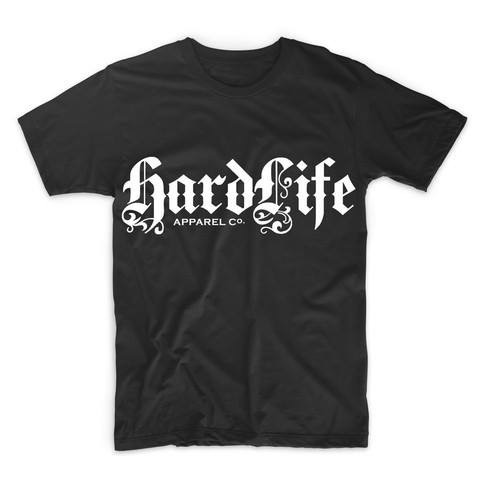
Perfect because they were honest. Every hoodie carried the energy of skate parks after dark. Every tee held the defiant spirit of a generation that refused to dress like their parents or buy what the mall told them to buy. The Old English lettering across the chest wasn’t a design choice—it was a declaration. HardLife. Two words. No apology.
Word spread the way it always does in subcultures—through proximity and trust, not algorithms. A skater in New York wore a Hardlife hoodie to a competition. A musician in Los Angeles posted a photo in an HRDLF tee. A graffiti artist in Phoenix tagged a wall in full Hardlife gear. Nobody was being paid. Nobody was being “influenced.” The brand was simply being worn by people who recognized themselves in it.
By 2010, the operation had outgrown the basement. Brooks relocated to Arizona and continued to build. But the ethos never shifted. When he could have cut corners to increase margins, he didn’t. When he could have chased fast-fashion cycles, he stayed focused on pieces designed to last years, not seasons. When the opportunity came to move production overseas, he kept it close.
A philosophy crystallized during those years, one that would define every decision the brand made for the next decade and beyond: Hardlife isn’t a clothing company. It’s a point of view. Authenticity over hype. Community over competition. Substance over spectacle.
The customers who found the brand during this period weren’t casual shoppers. They were believers. They didn’t just buy Hardlife—they became it.
The Resilience Years
If the first decade was about building the dream, the second was about refusing to let it die.
The streetwear market detonated between 2015 and 2020. Suddenly every luxury conglomerate wanted a piece of the culture. Nike, Adidas, Supreme—brands with billion-dollar war chests flooded the space with “authentic” streetwear produced by design teams who’d never set foot on a half-pipe. The playing field wasn’t just uneven. It was vertical.
Hardlife Apparel faced the choice that every independent brand eventually confronts: compete with the giants on their terms, or double down on what makes you different. Brooks chose the latter. Every single time.
While competitors chased hype drops and artificial scarcity, Hardlife built community. While others optimized for quarterly earnings, Hardlife optimized for trust. While the industry accelerated toward disposable fashion—wear it once, post it, throw it away—Hardlife kept making pieces built to survive.
The financial pressure was relentless. There were months when the math didn’t work. There were nights when Brooks stared at spreadsheets wondering if this was the week it all collapsed. Every independent founder knows that feeling—the gap between conviction and cash flow, the quiet terror of betting everything on a vision that the market hasn’t validated yet.
What kept the brand alive wasn’t strategy. It was the community. The customers who’d been there since the basement days. The skaters and artists and musicians who saw Hardlife not as a label on their chest but as a mirror of their identity. You can’t put that in a pitch deck. You can’t manufacture it in a boardroom. You either have it or you don’t.
Hardlife had it.
Around 2018, the hype cycle began to cool. The fast-fashion streetwear brands moved on to the next trend. The limited-edition collaborations stopped generating the same hysteria. And when the dust settled, the brands still standing weren’t the ones with the biggest budgets. They were the ones with the deepest roots.
By 2023, Hardlife Apparel had achieved the rarest thing in streetwear: longevity. Not through reinvention or rebranding or pivoting to whatever the algorithm demanded—but through the simple, stubborn act of remaining exactly what it always was.
The Next Chapter
In 2024, nearly two decades after those first screen-printed tees left a Philadelphia basement, Hardlife Apparel entered a new phase—not a reinvention, but an amplification.
The brand has always operated on a principle that most companies only pretend to understand: that a clothing line is only as strong as the community wearing it. The hoodies and tees and caps were never the product. The product was belonging. The product was identity. The product was a shared belief that nothing worth having comes without the grind.
That belief now extends further than ever. Hardlife’s commitment to giving back—to addressing childhood hunger, supporting homeless youth, funding food drives, and building skateparks in underserved communities—isn’t a corporate social responsibility initiative bolted onto a brand strategy. It’s the natural extension of a philosophy that has guided every decision since 2006: the culture gives to us, so we give back to the culture.
The Old English script. The skull and laurel crest. The five letters—HRDLF—that have become shorthand for a movement that refuses to be co-opted. These aren’t design elements. They’re artifacts of a nearly twenty-year conversation between a brand and its people.
Today, Hardlife Apparel Company LTD stands where it has always stood: at the intersection of street culture and uncompromising quality. The pieces are sharper now. The production is refined. The reach is global. But the basement energy is still there in every stitch—the raw, defiant belief that the grind is the point, that nothing awesome comes easy, and that the only brands worth wearing are the ones that actually mean something.
There Is Only One
We live in an era of knockoffs. Of brands launched on Monday and liquidated by Friday. Of culture stolen, repackaged, and resold by people who were never part of it. In that landscape, longevity is the ultimate act of defiance.
Hardlife Apparel Company LTD has been in continuous operation since 2006. Not because of outside investment. Not because of viral marketing. Not because of algorithmic luck. Because one founder, one community, and one unshakeable conviction refused to bend.
From a Philadelphia basement to a global movement. From hand-printed tees to a full collection. From underground to undeniable.
There is only one. The original.